
duty to accommodate apply outside of Ontario
The concept of the duty to accommodate is often associated with Ontario, but it is important to recognize that this legal and ethical obligation extends beyond the province’s borders. The duty to accommodate is rooted in the broader principles of human rights law across Canada and in various international frameworks. While Ontario has codified and publicized these obligations through legislation such as the Ontario Human Rights Code, other provinces and territories also impose similar responsibilities on employers, service providers, and institutions to ensure that individuals are not unfairly discriminated against and are provided reasonable adjustments to participate fully in work, education, and public life. Understanding how the duty to accommodate operates outside of Ontario requires a look at both Canadian federal law and the human rights frameworks of other provinces.
In Canada, the duty to accommodate is primarily grounded in human rights legislation, which exists at both the federal and provincial levels. Federally, the Canadian Human Rights Act mandates that employers and service providers make accommodations for individuals who require adjustments due to disability, religion, or other protected grounds. This means that even in provinces other than Ontario, employers operating under federal jurisdiction, such as banks, telecommunications companies, and interprovincial transportation providers, are legally required to meet accommodation needs. The Duty to accommodate outside of Ontario, therefore, is not only a moral expectation but a binding legal responsibility under federal law, ensuring that individuals are not excluded or disadvantaged in the workplace or other environments due to factors that can be reasonably accommodated.
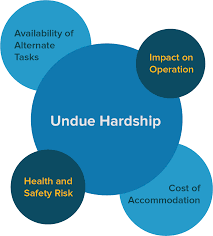
Each province and territory in Canada has its own human rights legislation, and while the terminology may vary slightly, the underlying principle of the duty to accommodate is widely recognized. For example, the British Columbia Human Rights Code, the Alberta Human Rights Act, and the Quebec Charter of Human Rights and Freedoms all require employers and service providers to accommodate individuals to the point of undue hardship. The concept of “undue hardship” serves as the limit of the duty to accommodate, recognizing that accommodation is necessary unless it imposes excessive financial, operational, or health-related burdens. This principle ensures that the duty to accommodate is applied fairly and practically while maintaining the rights of those needing accommodation.
Does the duty to accommodate apply outside of Ontario?
In practice, the Discrimination for taking medical leave in Ontario outside of Ontario can cover a wide range of scenarios, similar to those recognized in Ontario. Employees may require flexible work hours, modified job duties, or assistive technologies due to physical or mental disabilities. Religious accommodations, such as time off for religious observances or allowing dress variations, are also common. Schools, universities, and service providers must provide accommodations such as accessible facilities, adaptive learning materials, and alternative formats for communications. By requiring reasonable adjustments, the duty to accommodate outside of Ontario aims to create inclusive environments that respect diversity and remove barriers that prevent full participation in society.
It is important for organizations operating outside Ontario to understand that the duty to accommodate is not optional. Employers and service providers must engage in an interactive process with the individual requiring accommodation, assessing needs, exploring options, and implementing solutions whenever feasible. Legal consequences, including complaints to human rights commissions and tribunals, can arise if the duty to accommodate is ignored or inadequately applied. Therefore, understanding local human rights legislation and its application is critical for compliance. Awareness and proactive accommodation practices are essential, as the duty to accommodate outside of Ontario holds the same ethical and legal weight as it does within the province.
The duty to accommodate outside of Ontario also reflects Canada’s commitment to equality and human dignity at an international level. The principles of accommodation are aligned with conventions such as the United Nations Convention on the Rights of Persons with Disabilities, which emphasizes accessibility, non-discrimination, and full participation in society. By embracing the duty to accommodate, provinces and territories beyond Ontario contribute to a broader national and global culture of inclusion. In conclusion, the duty to accommodate applies outside of Ontario through both federal and provincial human rights legislation, creating obligations for employers and service providers to remove barriers and provide reasonable adjustments. The commitment to accommodation demonstrates Canada’s ongoing dedication to equality, fairness, and social inclusion across all jurisdictions.
